Buying a flashlight used to be simple. Walk into a hardware store, pick up something heavy with two D-cells, and call it done. Today the shelf is full of options with eye-catching lumen numbers, and it's easy to end up with a light that's too much or too little for what you actually do. This guide is the conversation we'd have with you at the counter: start with the question of where you'll use it, and everything else falls into place.
Start With Where, Not With Lumens
Lumens are a headline. They're useful, but they aren't the first thing to think about. A 3,000-lumen tactical light is overkill in a kitchen and underwhelming on a backwoods portage because the beam is the wrong shape. The better first question is: what room, what vehicle, or what trail is this light actually going to live in? Once that's settled, the rest of the spec sheet starts to make sense.
Most Canadians end up needing one of five lights — and sometimes more than one. Here's the short version of each role.
Everyday Carry
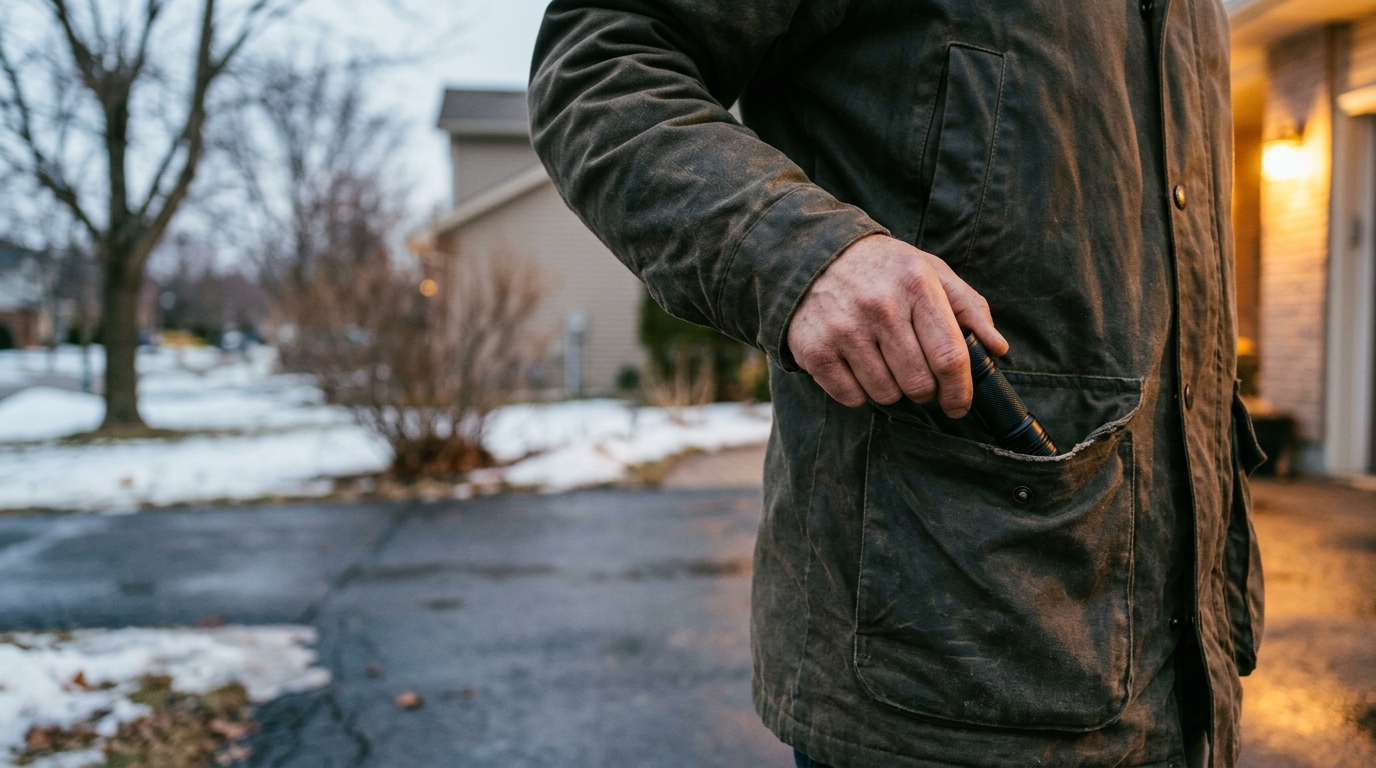
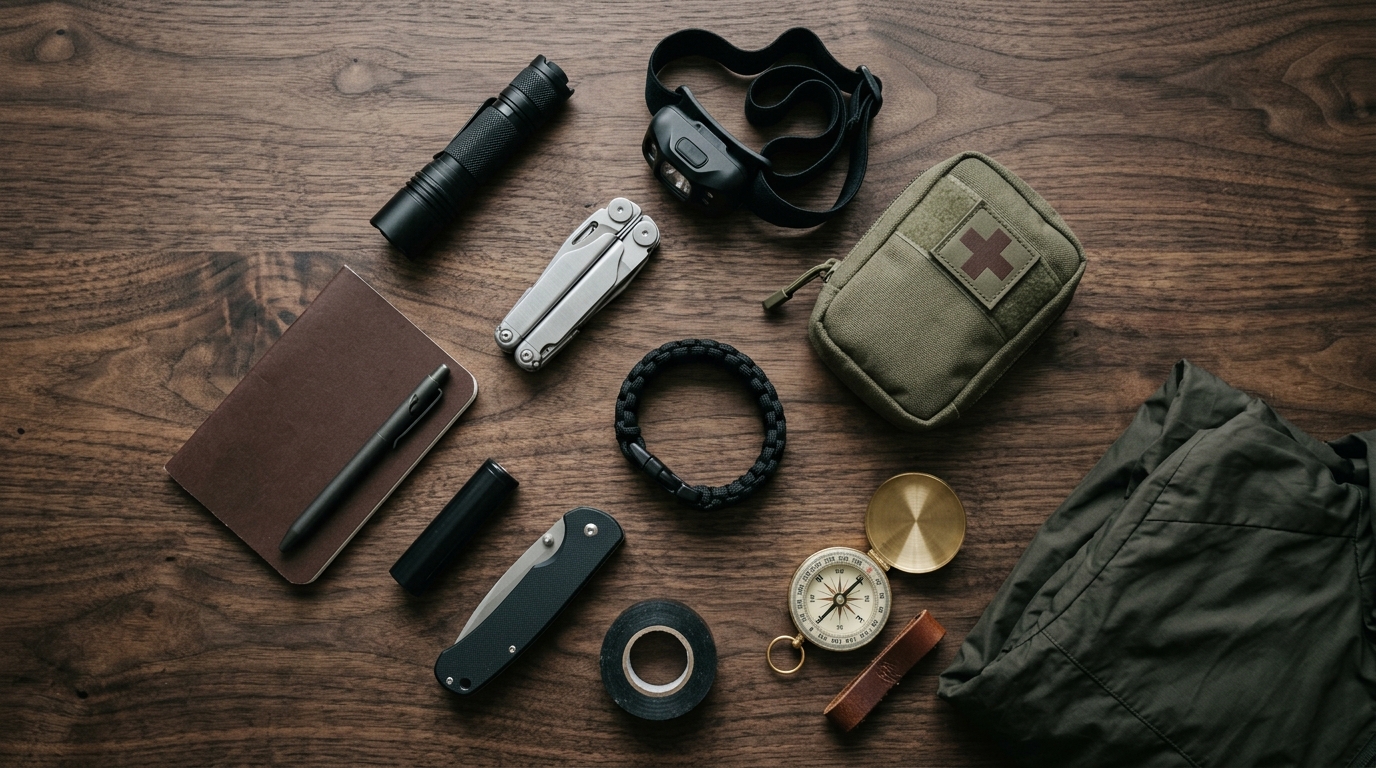
The light that lives in your pocket or your bag. It needs to be small enough that you don't leave it at home, bright enough to be useful when you do pull it out, and rechargeable so you aren't feeding it batteries. You'll use it more than you think — parking lots at 5 p.m. in January, basements, the back of the garage, under the dashboard, reading a map at a cottage dock.
Around the House
A lantern for the kitchen table and a pocket light near the front door cover almost every household situation. The lantern handles power outages, a blown breaker, or a late-evening deck dinner. The pocket light handles the walk down to check the panel, the trip out to the car, or the noise in the backyard. If you're only going to have two lights in the whole house, make it these two.
Hands-Free
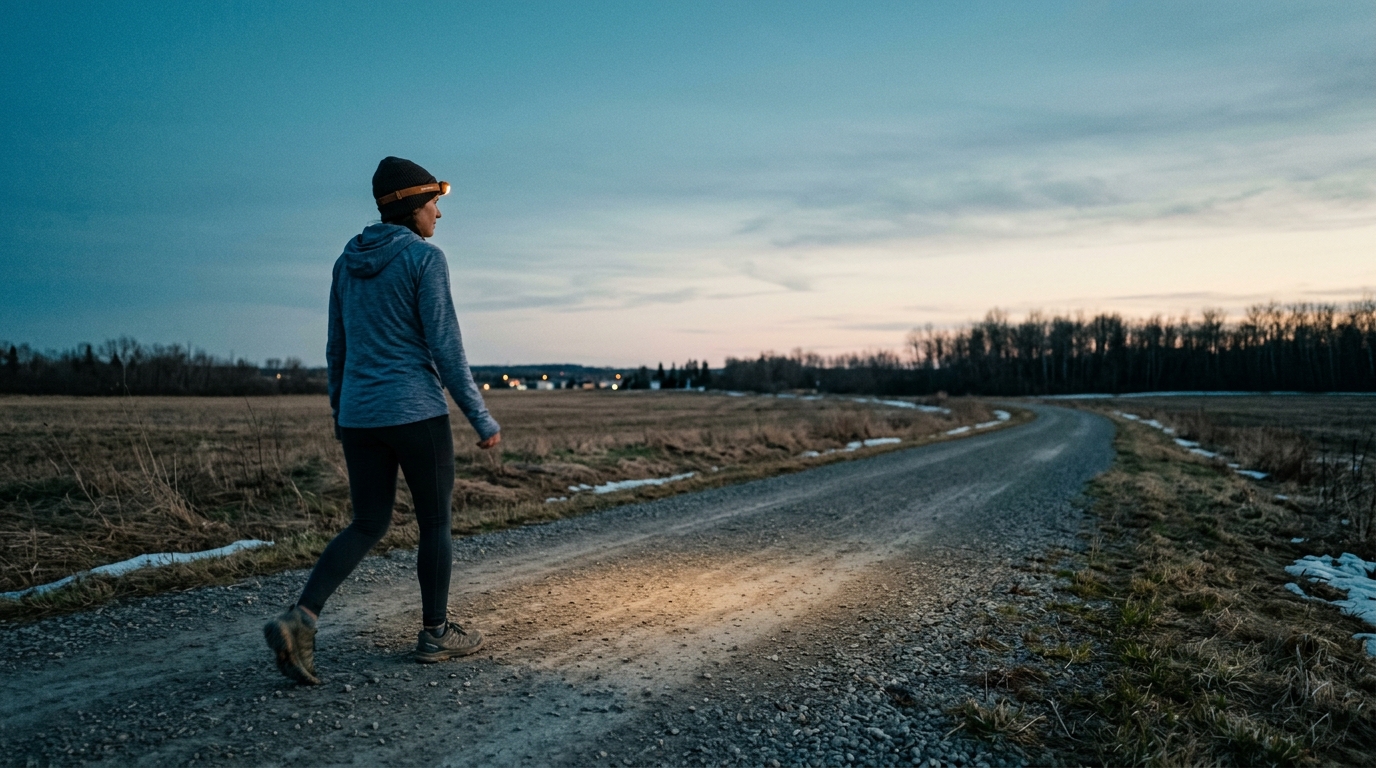
A headlamp is the answer every time both hands need to be doing something: changing a tire on the side of the highway, working under the sink, stacking firewood after sunset, hiking back to the trailhead in the last hour of daylight. It's also the single most underrated light most people don't own. Once you do own one, you reach for it constantly.
Outdoors and the Car
For a trunk kit, a glovebox, or a camping bin, you want something durable, weather-sealed, and willing to sit for months between uses. Runtime matters more than peak brightness — you don't need a searchlight in the glovebox, you need something that'll still work after six months of Canadian temperature swings.
Long-Distance / Search
The specialty role: a high-output flashlight that can throw a beam 300 metres or more. This is what you want if you have a rural property, a boat, or you do search-and-rescue or trail work. Most households don't need one, but the people who need one really need one, and nothing else will do.
A Few Specs That Actually Matter
Once you know the role, you only need to check a handful of numbers.
- Lumens (peak and sustained). Peak lumens are the headline; sustained lumens are the number the light can hold without overheating. For a pocket light, 1,000 to 1,800 peak lumens is plenty. For a lantern, 500 to 2,000. For a headlamp, 500 to 1,500. You almost never need more.
- Runtime on low. The most useful runtime number isn't the maximum-output one — it's the low-mode one. That's the setting you'll actually live on during a power outage or an evening around camp. Look for multiple hours, not minutes.
- IP rating (water and dust). IPX6 is good; IP68 is better and means the light survives being dropped in a puddle. Anything you'll use outdoors should be at least IPX6.
- Battery type. USB-C rechargeable is the modern default. Some lights have the charger built into the body; others use a removable 18650 cell with USB-C on the cell itself. Both approaches work well, and a single cable handles the whole setup either way. If you also want a light that can run on a standard AA battery as a backup, those exist and are great for a glovebox.
- How it behaves in the cold. Lithium-ion batteries lose capacity below freezing — all of them do. A quality cell loses less. Keep a backup 18650 or a charger somewhere warm, and you'll never notice.
Quick Picks by Use Case
Every light below is a Fenix, the brand we've carried since we opened our doors. Each one ships same-day from Mississauga, Ontario and comes with a 5-year warranty.
| Use Case | Our Pick | Why This One |
|---|---|---|
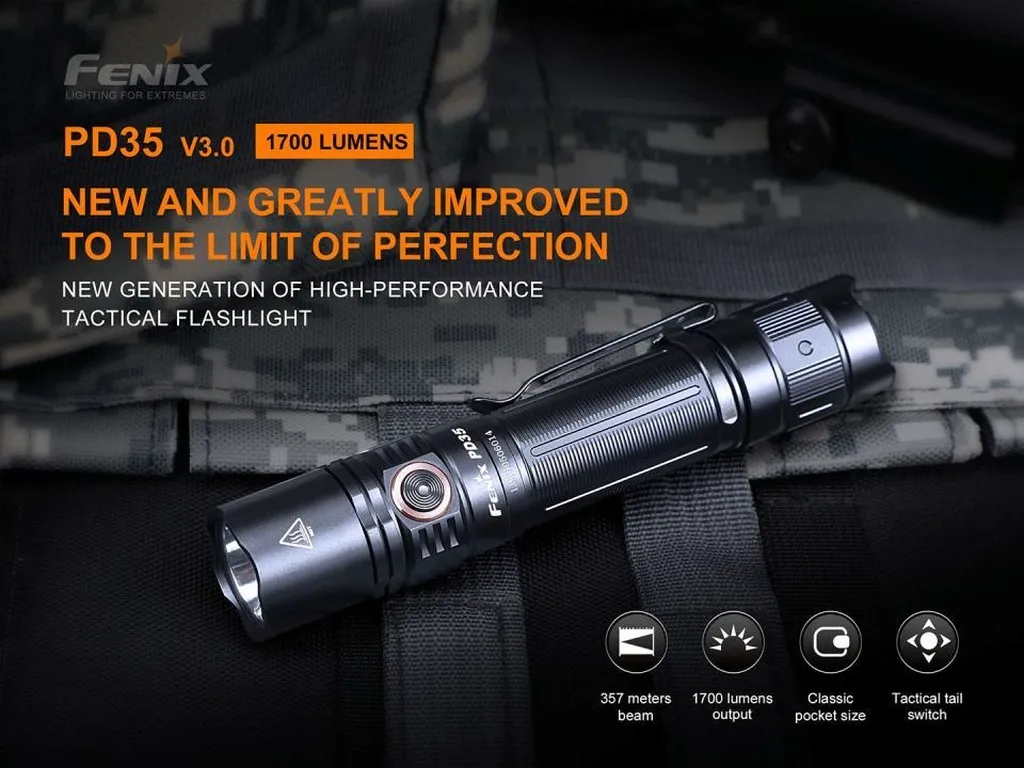
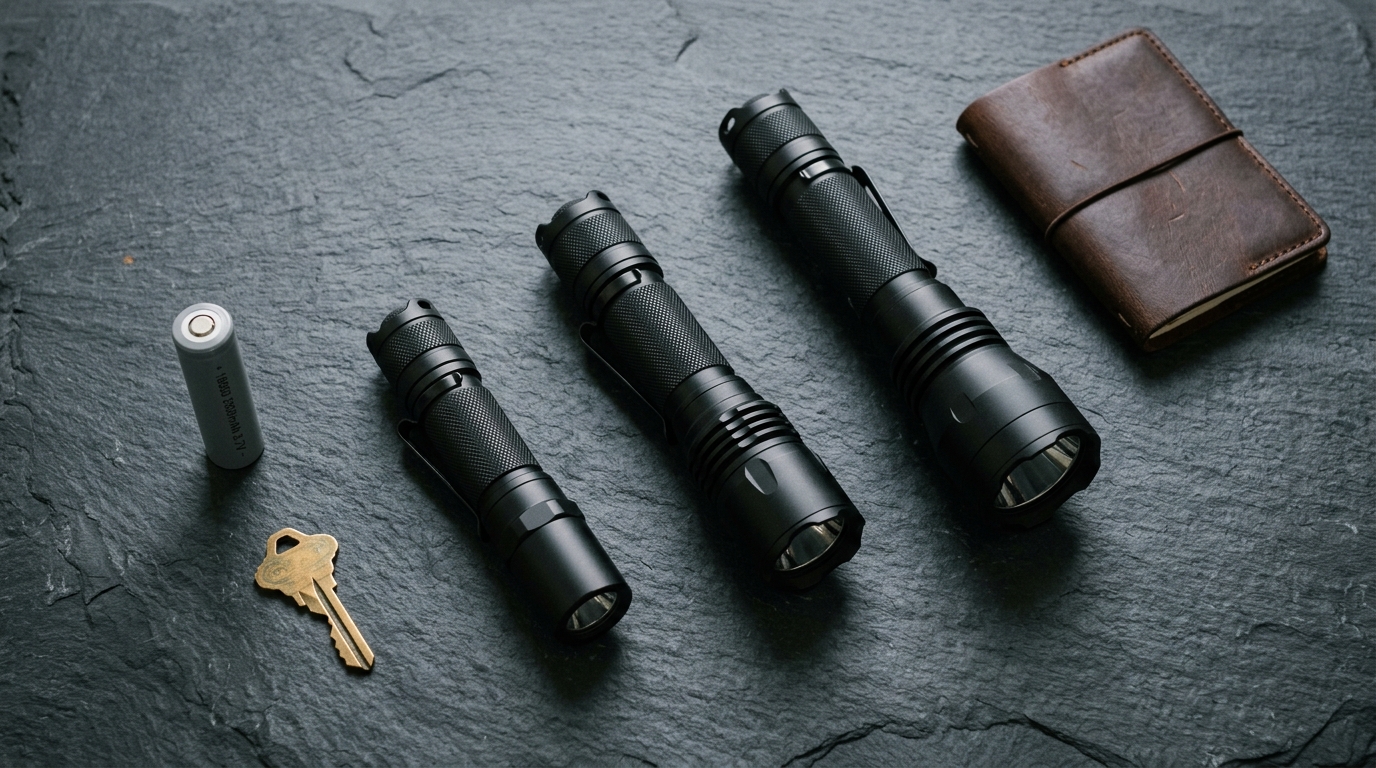
| Everyday carry — the default | Fenix PD35 V3.0 | 1,700 lumens in a slim, all-metal body that's been a Canadian EDC favourite for years. Comfortable in a pocket, serious when you need it, and runs on a removable 18650 so a spare cell gives you instant swap-and-go. |
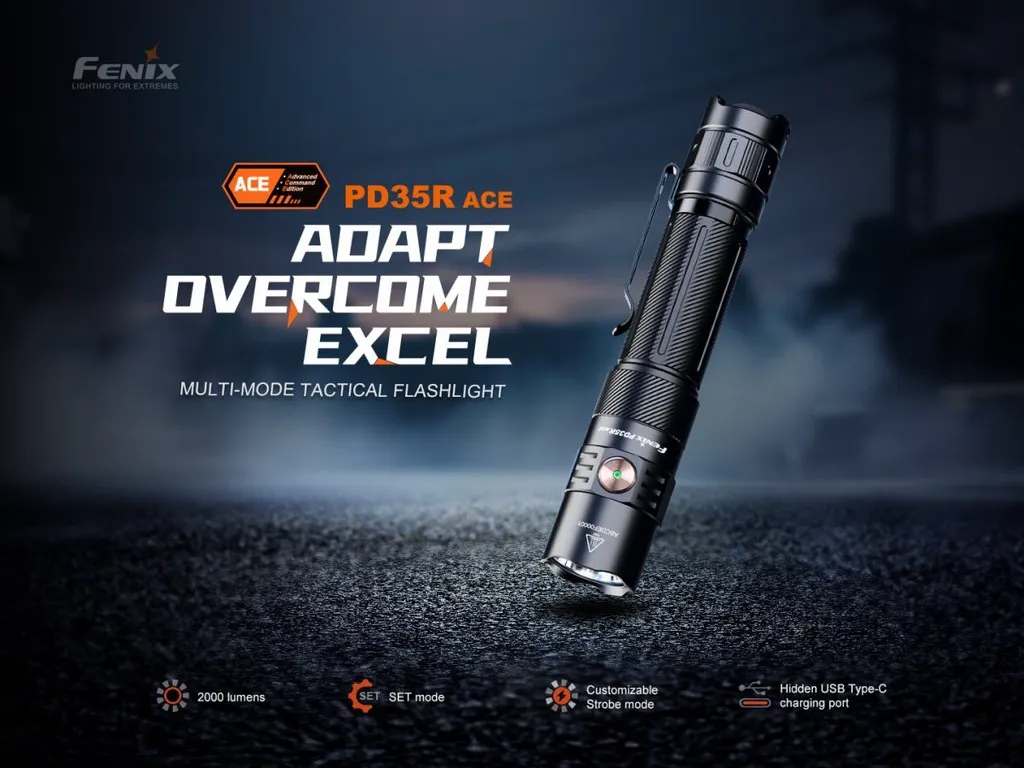
| Everyday carry — charger in the light | Fenix PD35R ACE | Same family as the PD35, slightly larger, with USB-C charging built into the body of the light itself instead of the battery. Pick this one if you'd rather plug the flashlight in directly and never think about which cell is charged. |
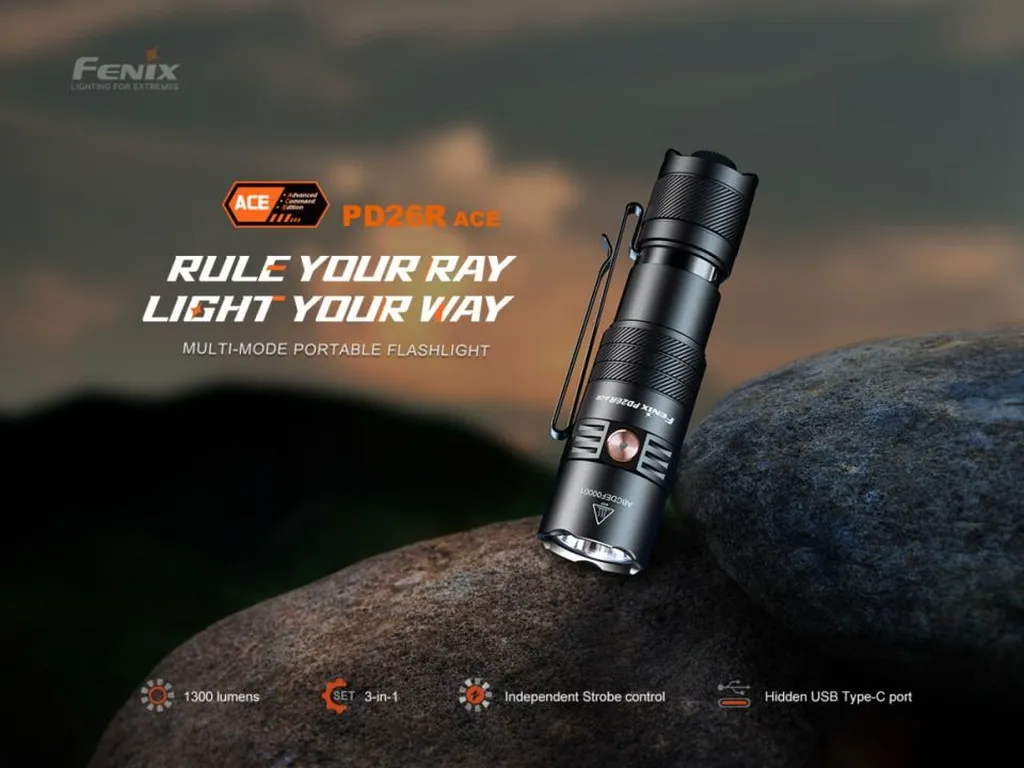
| Everyday carry — smaller | Fenix PD26R ACE | 1,300 lumens in a notably shorter body. The PD26R ACE runs on an 18350 cell — the shorter 18650 cousin — so you get real pocket-light output in a light that disappears into a jeans pocket. |
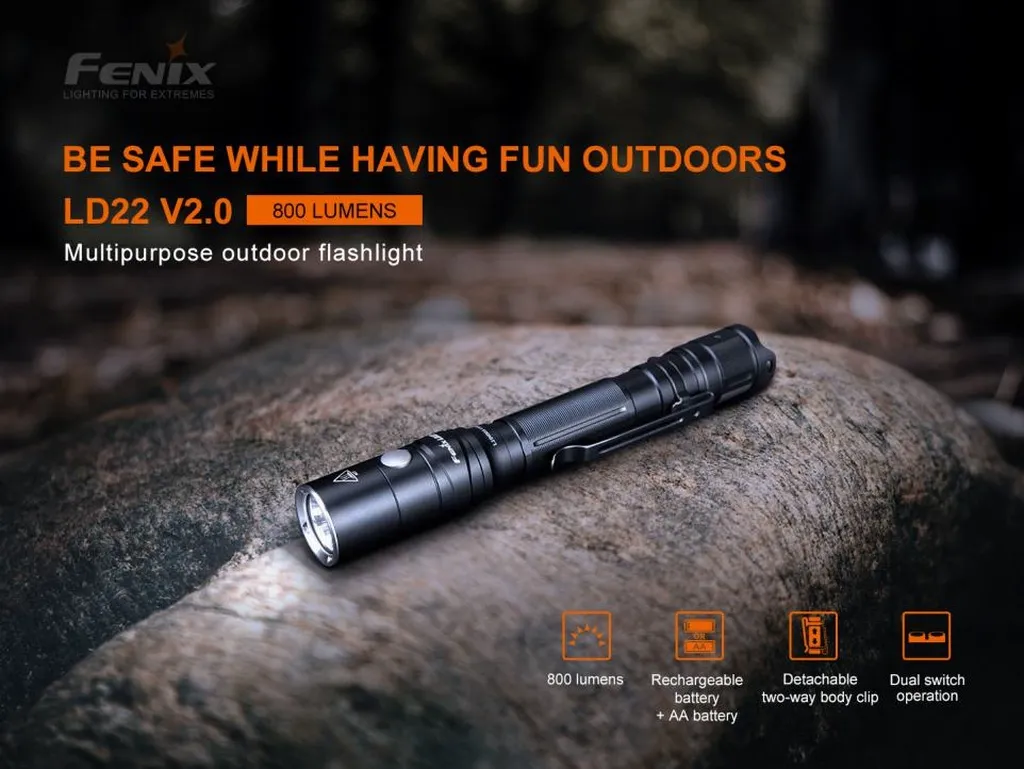
| Budget EDC — AA compatible | Fenix LD22 V2.0 | Runs on a 14500 lithium cell or a standard AA. Great for a glovebox, travel kit, or first real flashlight where you want the option to pop in a drugstore battery. |
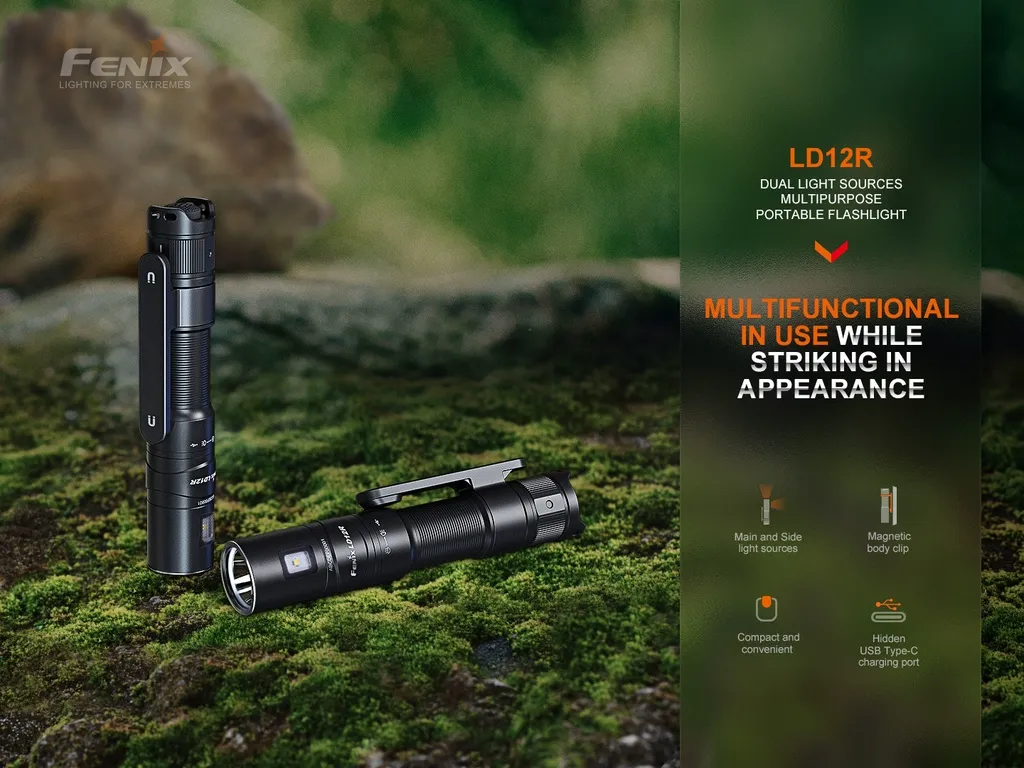
| Budget EDC — rechargeable | Fenix LD12R | 600 rechargeable lumens in a clean, modern body at an entry-level price. A strong "first Fenix" pick if you want USB-C charging without stepping up to the PD35 family. |
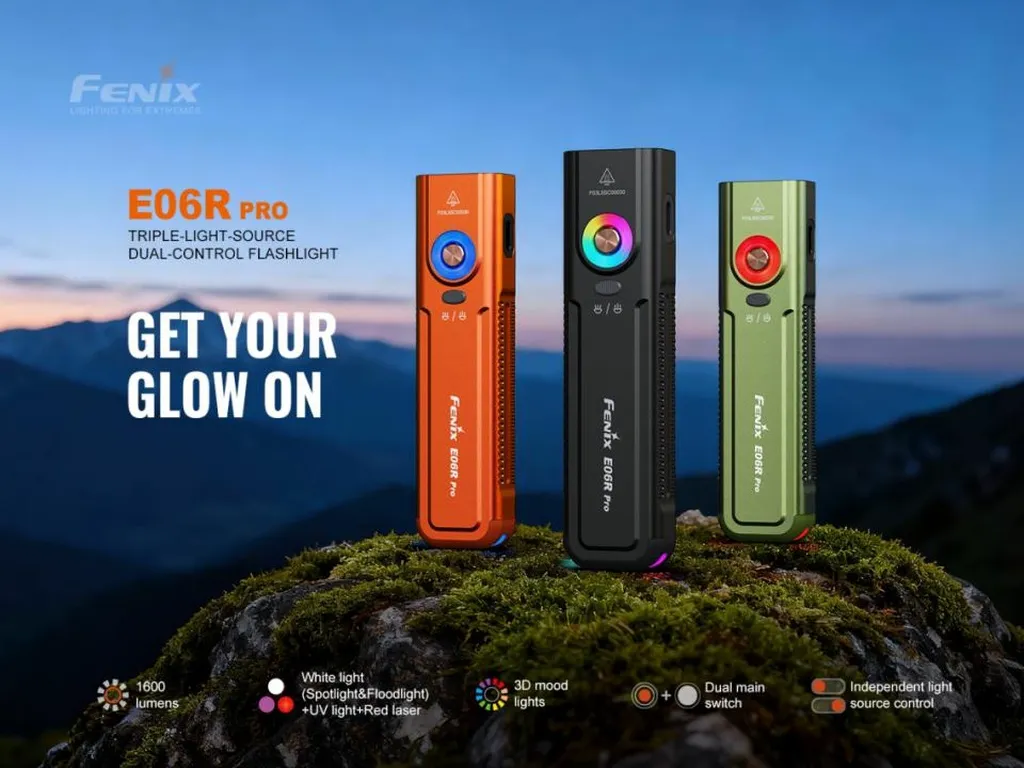
| Small EDC — dog walks, hallways | Fenix E06R Pro | A compact, USB-C rechargeable pocket light that's the right size for a dog walk, a dark driveway, or finding your way down to the laundry room. Not a keychain light and not a duty light — it sits in the sweet spot for everyday use around the home and the block. |
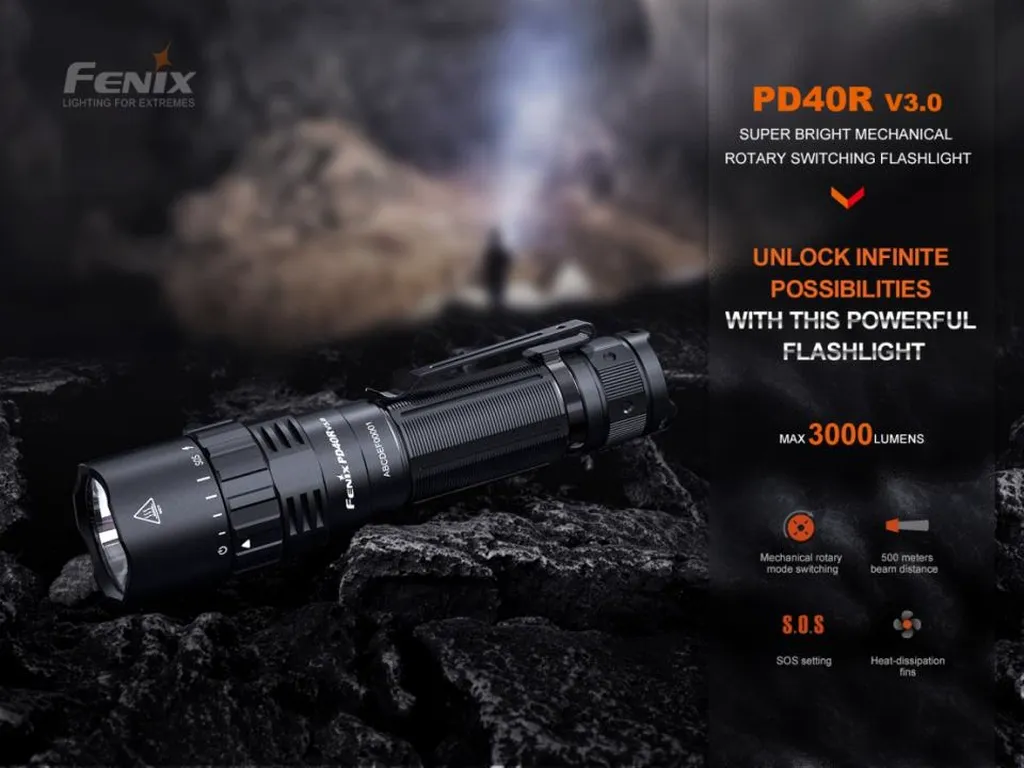
| Bigger all-purpose / long range | Fenix PD40R V3.0 | 3,000 lumens and a beam that reaches far enough to matter on a rural property or a back-country trail. A step up from the pocket lights when you need more distance but aren't ready for a full search light. |
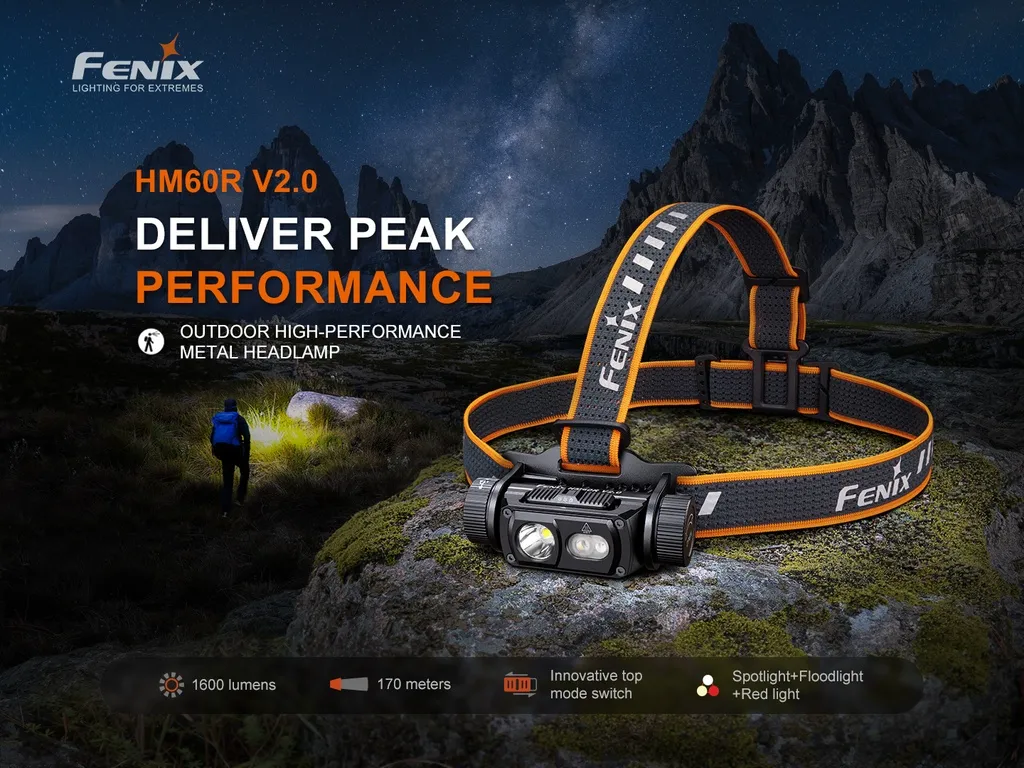
| Headlamp — everyday | Fenix HM60R V2.0 | 1,600 lumens with both flood and spot beams, USB-C charging, and a balanced weight that stays comfortable for hours. The default answer when someone asks "which headlamp should I get." |
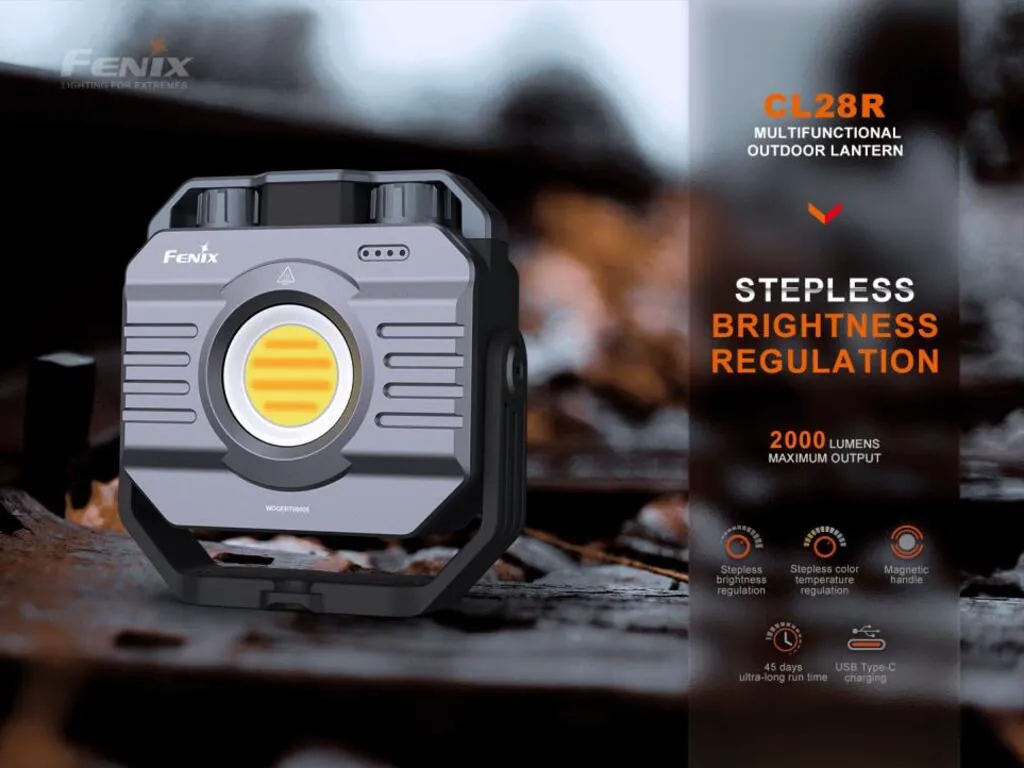
| Lantern — main room | Fenix CL28R | 2,000-lumen rechargeable lantern with dimming and a warm-white setting — enough to light a kitchen and a dining table without being harsh to eat under. |
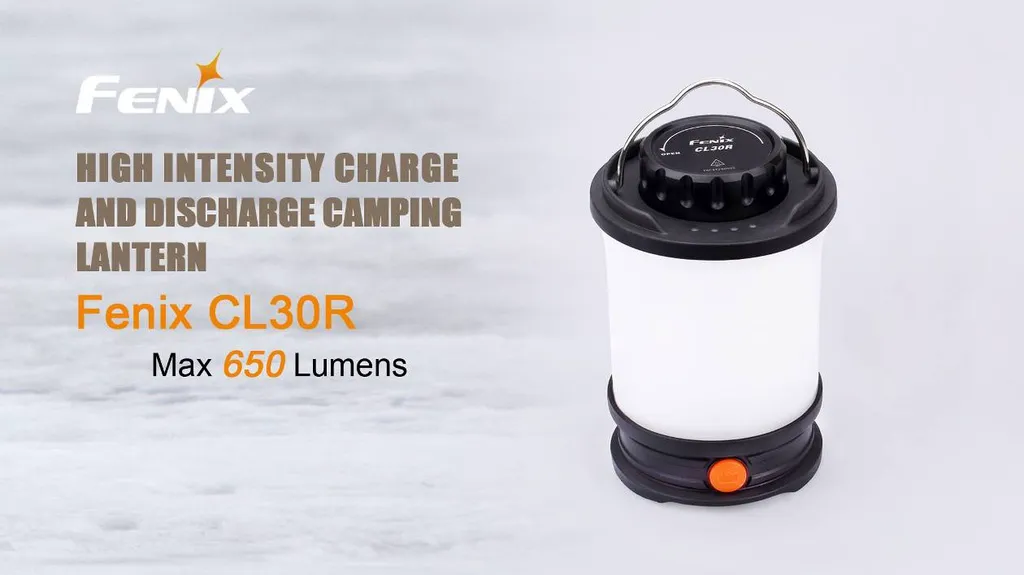
| Lantern — longer runtime | Fenix CL30R | 650 lumens with a very long low-mode runtime. A good choice if you want one lantern running all evening instead of a short bright burst. |
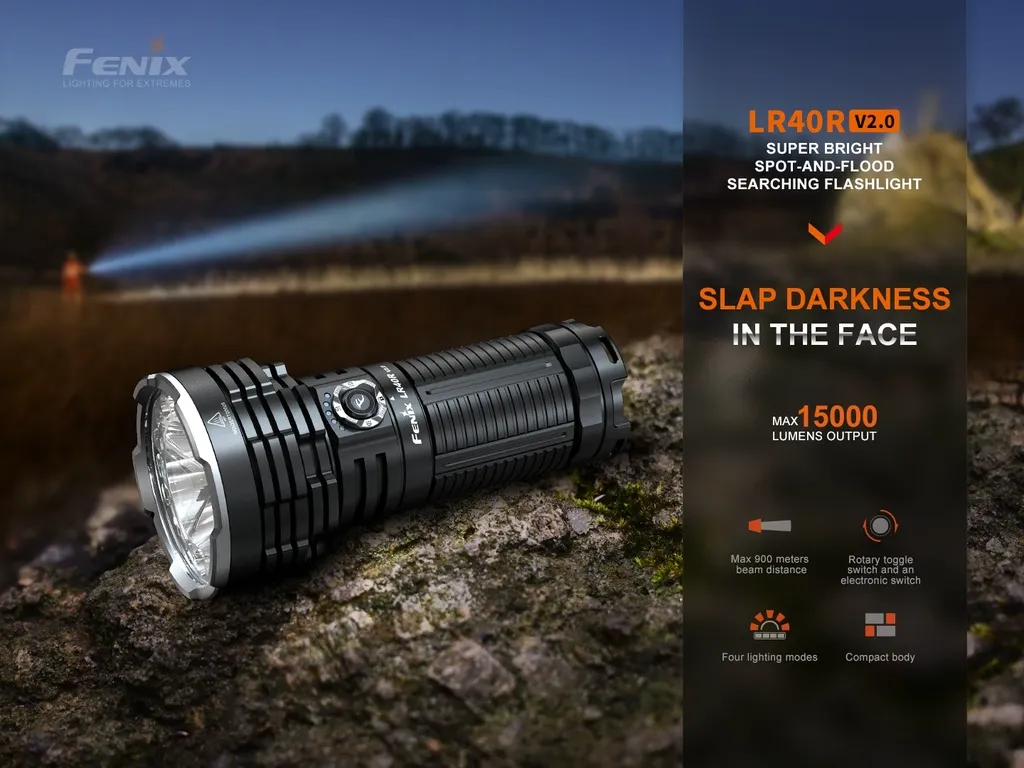
| Long-throw / search | Fenix LR40R V2.0 | 15,000 lumens and a beam that reaches roughly 900 metres. Overkill for most households; essential for rural properties, boats, and SAR work. |
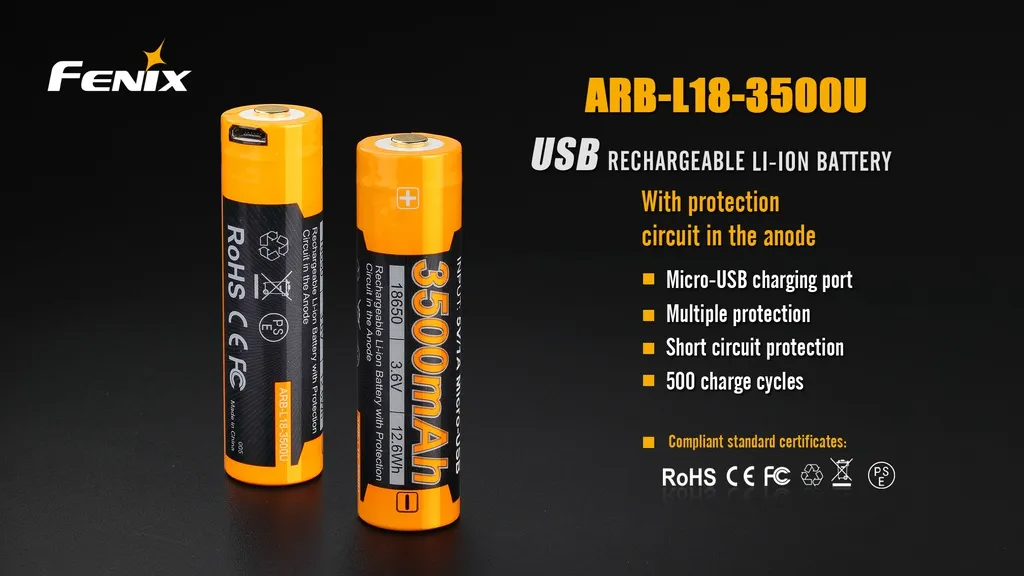
| Spare batteries | Fenix ARB-L18-3500U | Protected 18650 rechargeable cell — the battery most Fenix flashlights and headlamps run on. Keep a spare on the shelf and you'll never be caught short. |
If You're Still Not Sure — The One-Flashlight Default
If this article feels like too many choices and you just want the short answer: get a PD35 V3.0 for your pocket and a CL28R for the kitchen shelf. That's 90% of what a typical Canadian household needs, covered in two purchases, with no regrets and no duplication. If you'd rather plug the flashlight straight into a USB-C cable instead of swapping cells, pick the PD35R ACE instead — same family, same reliability, slightly larger body with the charger built in.
And if the first two lights make you want a third — a headlamp, usually — that's when you know you're building the right setup. Take your time. Buy the one that fits the job, not the one with the biggest number on the box.