Spring in Canada has a particular kind of evening. The clocks have moved forward, the light is lasting longer, and there's a real sense that winter has loosened its grip — but 7:30 p.m. on a late-March trail is still dusk, the dog still needs a walk after dinner, and the last kilometre back from the ridge is always darker than you expected. A headlamp is the one piece of kit that quietly changes all of that. Not because it's dramatic, but because it leaves both hands free and puts the light exactly where you're looking.
This is a short guide to why headlamps earn their keep in spring, what to look for when you buy one, and the Fenix headlamps we recommend for three common shapes of Canadian life: the everyday, the active, and the heavy-duty.
The Case for a Headlamp, Made Quietly
Most people who don't own a headlamp own a flashlight instead, and figure that's enough. It usually is — until it isn't. The moment you need both hands for the leash, the trekking pole, the map, the dog's second ball, the zipper on a jacket, or the cooler lid at a campsite, a flashlight becomes the thing you're holding in your teeth. A headlamp is the thing you're not holding at all.
There's a quiet tipping point that most first-time headlamp owners describe the same way: "I thought I'd use it camping, but now I wear it every time I take the dog out after dinner." That's the actual value. It's not for dramatic rescues; it's for the ordinary evenings that used to involve a bit of fumbling in the dark and now don't.
Three Shapes of Spring Evening
The After-Dinner Dog Walk
You're not running, you're not climbing, you're just walking the block with the dog. What you want is something that's light enough to forget you're wearing it, bright enough that you can see the icy patches and the dog's leash clip, and dim enough on low mode that you aren't blinding your neighbours. Runtime matters more than peak output — you'll live on low or medium the whole time.
The Neighbourhood Run and the Trail Run
This is where a good headlamp really shines. A running headlamp needs to stay put when you bounce, put a clean spread of light twenty or thirty metres down the road without being harsh at the edges, and shed the cold air without the battery giving up halfway through a 10K. Weight is the spec that matters — grams you don't notice become grams you fight every time your head turns.
The Trail Hike That Runs Long
Every hiker in Canada has a story about misjudging daylight by half an hour. Spring amplifies this because the light is deceptive — it feels later than it is at 5 p.m. and earlier than it is at 7 p.m. For hikes that might finish in the last hour of daylight, you want a headlamp that can throw a real spot beam down the trail when you need to see the next cairn, not just a flood that lights up your own feet.
The Specs Worth Checking
- Weight. Anything under 120 grams with the battery in is comfortable for hours. Anything over 150 starts to feel like a weight on your forehead on a long walk. Runners should aim for the lightest option they can live with.
- Beam shape. Flood is for up-close work (maps, dog leashes, the inside of a tent). Spot is for distance (trail ahead, driveways, dark corners of a campsite). The best everyday headlamps let you mix the two or switch between them.
- Output on the settings you'll actually use. Peak lumens are a headline number; the setting you'll live on is medium or low. Check the runtime on medium — if it's 4 hours or more, you're fine for almost any normal evening.
- Charging. USB-C is the default now. A single cable to charge the rest of your gear also charges your headlamp. Much easier than hunting for the right adapter.
- Water resistance. IP66 is enough for Canadian rain and slush. IP68 survives dropping it in a puddle. Both are fine; neither is a reason to pay a premium unless you boat, kayak, or work outside in weather.
- Cold-weather behaviour. Lithium-ion batteries lose a bit of capacity in sub-zero temperatures — all of them do. A quality cell loses less. If you do a lot of below-freezing evening hikes, keep a spare cell warm in an inside pocket and swap it when the first one fades.
Quick Picks
Every headlamp below is a Fenix, the brand we've carried since we opened our doors. Each one ships same-day from Mississauga, Ontario and comes with a 5-year warranty.
| Who It's For | Our Pick | Why This One |
|---|---|---|
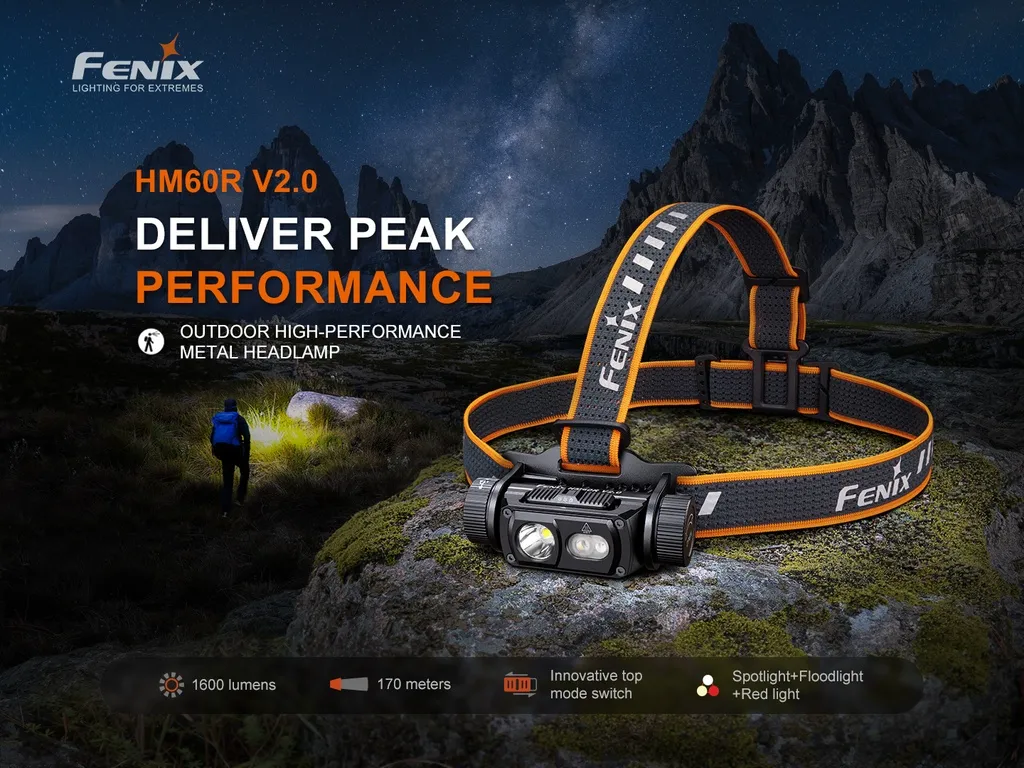
| The everyday default | Fenix HM60R V2.0 | 1,600 lumens with both flood and spot beams, USB-C charging, and a balanced weight that stays comfortable for hours. The headlamp to buy if you want the question "which one should I get?" to just go away. |
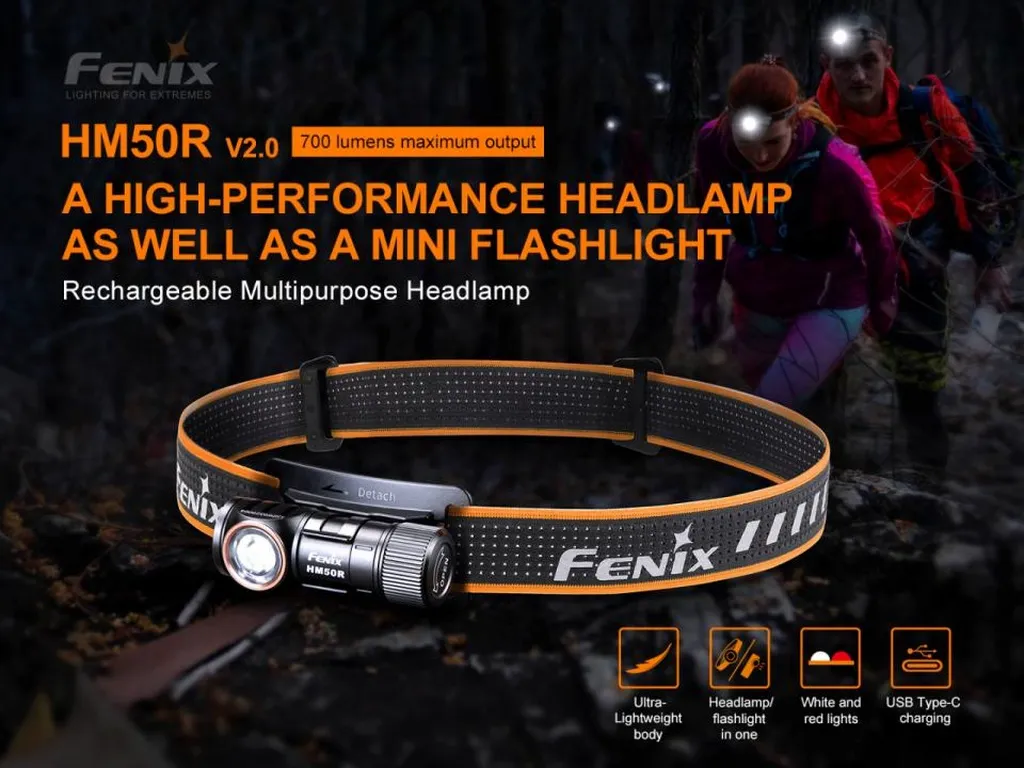
| Runner / light-and-fast | Fenix HM50R V2.0 | 700 lumens in a notably smaller, lighter body. Pick this if you run, if you have a smaller head, or if you want something that disappears under a toque. Runs on a single 16340 cell so the whole unit stays light. |
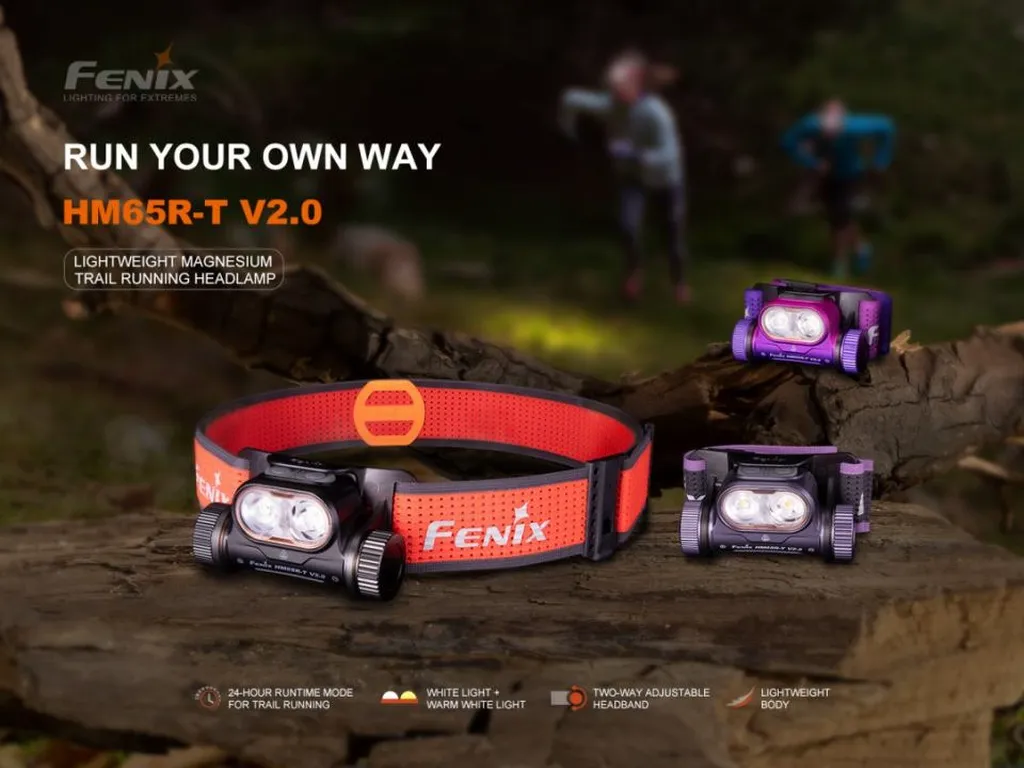
| Outdoor worker / serious hiker | Fenix HM65R-T V2.0 | Magnesium-alloy housing, flood and spot beams, and a reputation among arborists, utility crews, and SAR teams. Heavier than the HM60R but built to take abuse the HM60R wasn't designed for. |
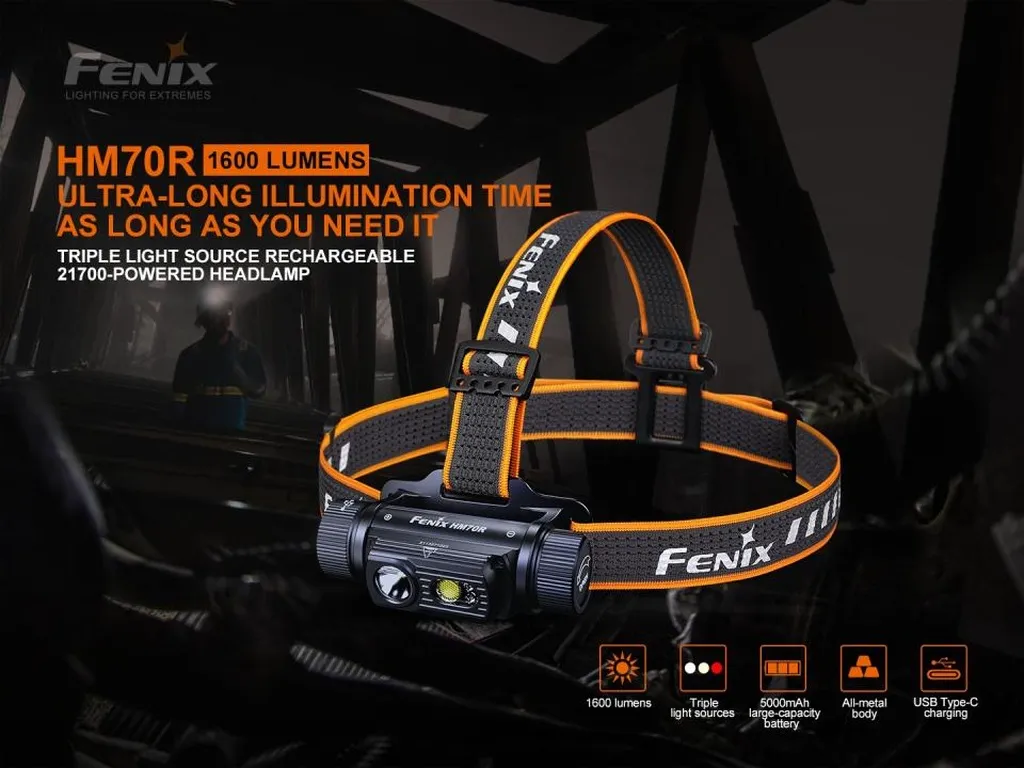
| Long nights, long runtimes | Fenix HM70R | A larger headlamp running on a high-capacity 21700 cell — a bit heavier than the HM60R, but with noticeably longer runtimes for overnight trips, winter camping, or a full shift of backyard work after dinner. |
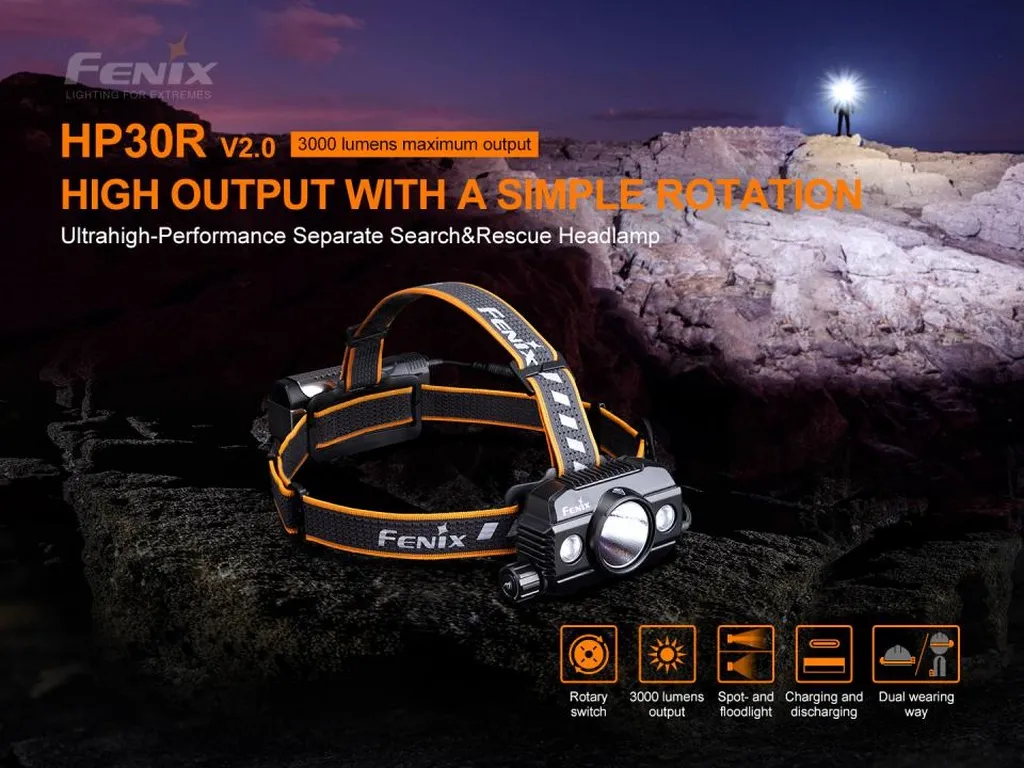
| Long-throw / expedition | Fenix HP30R V2.0 | 3,000 lumens and a beam that genuinely throws. For trail runners who want car-headlamp levels of output, expedition hikers, and night skiers. Not what you need for a dog walk, but not what anything else can replace. |
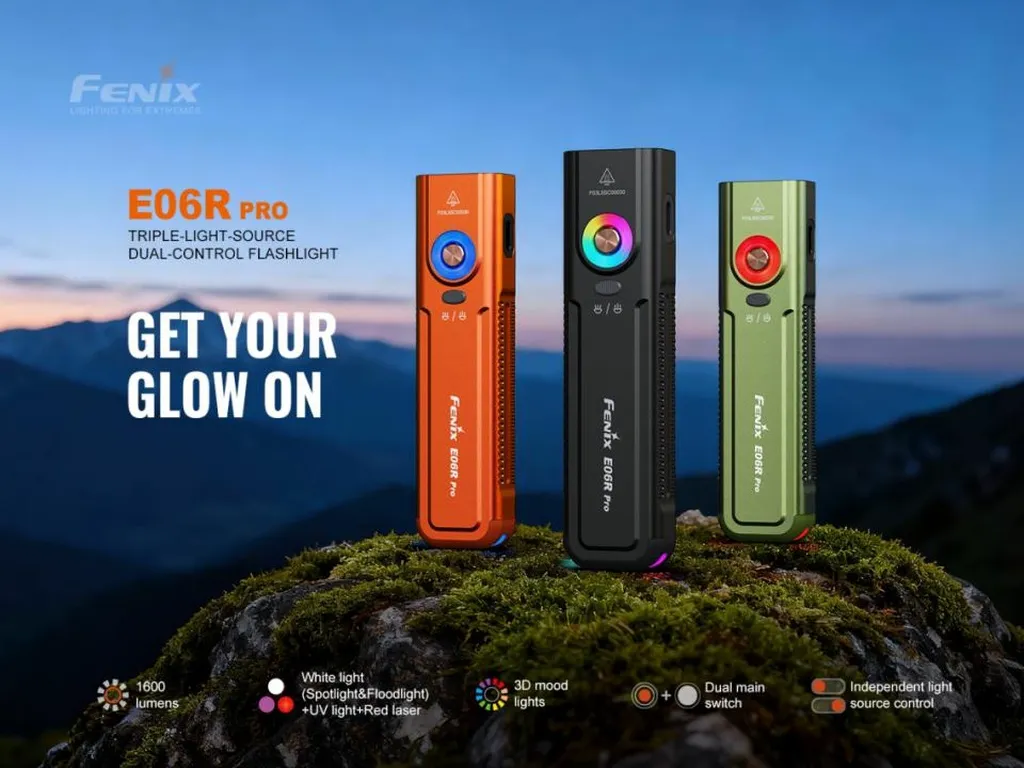
| Pocket light companion | Fenix E06R Pro | A compact, USB-C rechargeable pocket light for the evenings when you don't feel like wearing a headlamp — the quick walk to the car, the basement trip, the backyard check. Sits on the entry table next to your keys. |
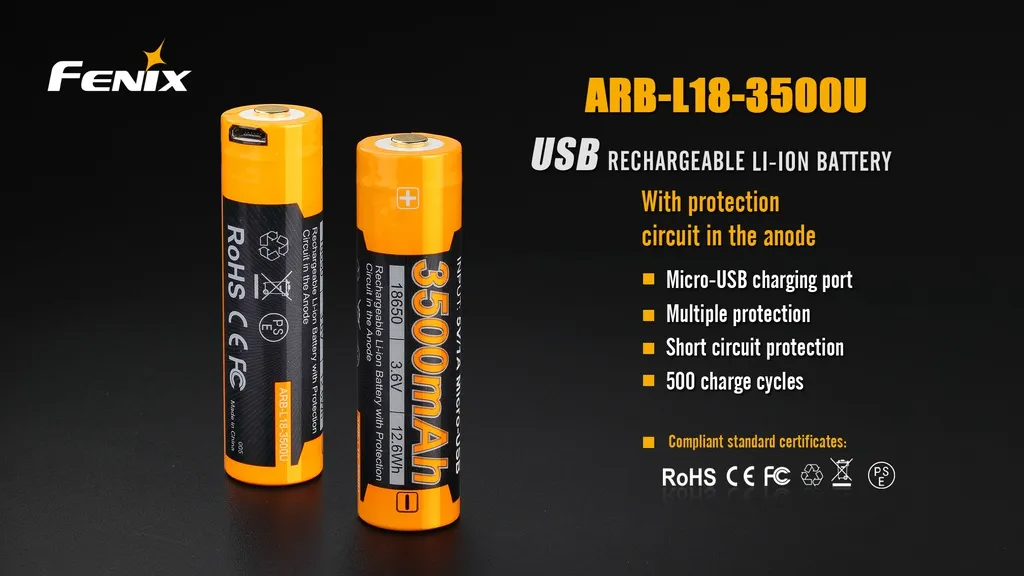
| Spare batteries | Fenix ARB-L18-3500U | Protected 18650 rechargeable cell. For the HM60R, the HM65R-T, and most of the everyday Fenix line — keep one warm in an inside pocket when the temperature drops. |
The One-Headlamp Answer
If you just want the short version: most people should buy a HM60R V2.0, charge it when it arrives, and keep it on a hook by the door next to the leash. Everything you'll do with it — dog walks, running loops, trail exits, backyard work, late-night tire changes, spring camping, helping a neighbour find their keys in the driveway — will be easier than it used to be. And the moment you realize you reached for it instead of your phone flashlight, you'll know why it earned its spot on the hook.